We're moving! This site will be relocating to goingto.university in 2026. Please update your bookmarks to the new address.

Italy
Visit course webpage| The award | How you will study | Study duration | Course start | Domestic course fees | International course fees |
|---|---|---|---|---|---|
| MSc | Full-time | 2 years | October | EUR 150 per year | EUR 150 per year |
The “Economics and Technologies of Sustainability” master’s degree is an interdisciplinary program
addressing global challenges through a blend of economics, technology, and sustainability
principles. It focuses on equipping students with skills to tackle pressing issues such as resource
scarcity, energy challenges, the transition to a sustainable production, circular economies, and
strategies to identify and economically valorize sustainability implementations, and the socio-political aspects of sustainability and its realization. Interdisciplinary classes in both economic and natural sciences cover planetary resources, renewable and non-renewable resource economics,
environmental economics, sustainable production technologies, concepts of energy generation and
storage, carbon neutrality and carbon negativity, waste valorization strategies, sustainability
identification, certification systems, sustainability-driven strategies for businesses, socio-political
possibilities for implementing sustainability across societies in a changing world.
The program *emphasizes both theoretical understanding and hands-on experience through
specialized labs*, with both formats building on modern didactic concepts that aim at a student
involvement at unprecedented levels.
Graduates will enter the world of work as “Sustainability Specialists” or “Tech-Economists,”
professionals capable of *bridging economic and technological solutions for sustainable
development within private companies, public sectors and as consultant.*
Admission requires prior knowledge in economics, science, or related disciplines, ensuring students
have a strong foundation in fields like basic microeconomics and macroeconomics, statistics,
general biology and chemistry, and general geology. The curriculum blending socio-economic and
scientific perspectives aims at fostering innovation in realizing sustainability in all key areas of
modern societies. Graduates, entering the world of work as “Sustainability Specialists” or “Tech-
Economists for Sustainability,” are well-prepared for careers in corporate responsibility, sustainability consulting, and policy-making, playing a pivotal role in description, quantification, design, implementation and valorization of environmental sustainability.
Learn more about Economics and Technologies of Sustainability, MSc - at University of Milano-Bicocca
Visit course webpageBachelor diploma (or higher)
Applicants must have a background in economics, business, mathematics-statistics, or environmental-cultural disciplines such as chemistry, biology, and geology, demonstrated through prior studies with at least 36 ECTS hours of coursework in these areas, among which at least 18 ECTS need to be in economics. For education systems that do not use ECTS, the faculty will consider the workload hours indicated in the transcript and may request the course syllabus if needed. All candidates have to take an interview, evaluated by an admission commission, in order to assess their knowledge in the fields relevant to the course and their motivation.
English: B2 level knowledge is required.
There are 17 other courses listed from University of Milano-Bicocca. A selection of these are displayed below:
Economics and Science for Environmental Sustainability (ESES) BSc
University of Milano-Bicocca
Find out more 
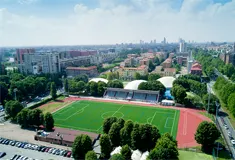
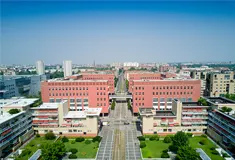
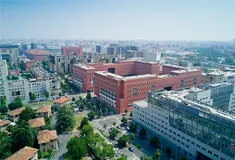
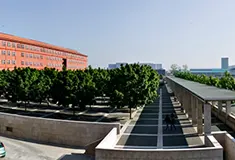


University of Milano-Bicocca main campus location is shown on the map below: