

StudyLink logoHome
Students on a university campus

Study options for this course

The award How you will study Study duration Course start Domestic course fees International course fees
Master DegreeFull-time2 yearsSeptemberEUR 2694 per yearEUR 21000 per year

About Redesigning the Post-Industrial City, Master Degree - at Erasmus School of Social and Behavioural Sciences (ESSB), Erasmus University Rotterdam

Is this the programme you're looking for?

Calling future urban thinkers who are curious and interested in how we can revitalise post-industrial cities! This Erasmus Mundus Master in Science was developed by 8 world-class universities within the scope of UNIC, the European University of Cities in Post-Industrial Transition, and aims to educate the next generation of urban studies specialists with the 21st century skills and knowledge needed to address the challenges and opportunities of superdiverse societies and cities in transition. 

The study programme in a nutshell

The RePIC programme provides high quality academic education and professional competencies for excellent students, who are eager to specialise in subdisciplines of Urban Studies in a wider sense and who intend to build bridges into neighbouring disciplines, e.g., Law, Civil Engineering, Business, Sociology, Data Science, or Psychology.

This exciting and unique new Erasmus Mundus funded Master’s programme creates an educational experience which recognizes and responds critically to issues of cities in different forms and stages of post-industrial transition and educate the next generation of specialists with the 21st century skills and knowledge needed to address the challenges and opportunities of cities in transition and superdiverse societies.

What you will learn

RePIC’s vision is to develop a new network of urban thinkers with the capacity to contribute to future-oriented, avant-garde thinking on the revitalisation of the post-industrial city.

RePIC graduates possess advanced research, professional, digital design, and spatial analysis skills, can mediate between the spheres of experts and laypersons, academia, and citizens, equipped with broad knowledge in the various sub-disciplines of the field.

After graduation you will have broad knowledge of:

  • urban transformations and urban design in a global perspective; and are able to apply this knowledge in practice, and across different jurisdictions,
  • the interdependent human and environmental urban systems,
  • sociological and cultural approaches towards urban dynamics and actors, understanding major local and global historical developments influencing urban settings,
  • dynamics and processes involved in the revitalisation of post industrial cities from the social science, sustainability, and circular economy perspectives.

Learn more about Redesigning the Post-Industrial City, Master Degree - at Erasmus School of Social and Behavioural Sciences (ESSB), Erasmus University Rotterdam

Visit course webpage

Notes about fees for this course

Find out more at: Tuition fees | Erasmus University Rotterdam

Entry requirements

Applicants from diverse backgrounds who meet the necessary entry requirements and admission criteria listed below may apply for this programme.

Each year, RePIC may accept a study cohort with a total capacity of around 60 students. Admission may be granted to applicants who are not in conflict with national legal requirements for admission and meet the eligibility criteria.

Admission requirements

Candidates from diverse backgrounds, who have completed a Bachelor’s degree (university first cycle, Bachelor, EQF level 6) preferably with a dissertation, or an equivalent degree, in a discipline of relevance to RePIC, that gives them access to a Master degree programme and demonstrable experience in themes related to redesigning of post-industrial cities and design-related backgrounds, may apply to RePIC. 

This includes but is not limited to the fields of Architecture, Urban Design, Urban Planning, Urban Development, Geography, Civil Engineering, Environmental Engineering, Geoinformatics, Sociology, Public Administration, Business Studies, Culture, Media and Visual Arts Studies. 

Find out more on the official RePIC website.

Fees, Funding and Scholarships at Erasmus School of Social and Behavioural Sciences (ESSB), Erasmus University Rotterdam

Obtaining a scholarship or grant is not easy and requires some effort, but that doesn’t mean you shouldn’t try! We have listed out all scholarships and grants our students use most.

Student reviews of Erasmus School of Social and Behavioural Sciences (ESSB), Erasmus University Rotterdam

Find out what students say about Erasmus School of Social and Behavioural Sciences (ESSB), Erasmus University Rotterdam

Read the testimonial of Adham Aly - alumnus Governance of Migration and Diversity

"Amongst the infinite possibilities that are available today, EUR offered me the best opportunity."

After my bachelor degree, I once again had to ask myself the question: what’s next? My bachelor studies were in International Management and Business. When I gaduated I felt the need to change my field of study. I wanted to study something that would have a social impact and with which I would be able to expand my horizon. Moreover, I wanted to help people in this troublesome world. I am a so-called “second generation migrant”, as I was born and raised in Milan (Italy) by Egyptian parents. Due to this background, I have always had a special connection to the phenomenon of migration. I felt a particular empathy towards migrants and I had a passion for helping them. Growing up, I would see the challenges my parents faced.

But before I would be able to do anything, I had to increase my academic and cultural knowledge about migration. Amongst the infinite possibilities that are available today, EUR offered me the best opportunity: a specific master programme that covers the vital topic of migration in today’s society. I had to seize the opportunity to follow this programme. So far, this master programme has exceeded my expectations. The professors who have taught the courses  possess an extremely high level of expertise. Critical thinking is one of the many things I have learned this year. I learned not to take things for granted, but to assess for instance a notion or a news article on a deeper level. The best example is the concept of integration. We hear this word continuously and therefore we should ask ourselves: what does it actually mean.

Lastly, this master  programme has stimulated me to build bridges rather than walls.
Read the testimonial of Christine Eamer - Alumna Governance of Migration and Diversity

"I have enjoyed learning from all of our engaging professors and gaining a deeper theoretical and multifaceted understanding of the issues within the field."

After completing my bachelor degree in Political Science from York University in Toronto, I was ready for a new challenge and decided to move abroad. This coincided with the influx of arrivals of asylum seekers in Europe in 2015/2016 and prompted me to gain a keen interest in migration. Eventually, this interest led me to the position of Migration Programme Assistant at the Canadian Embassy in Berlin where I learned a lot about the particular migration landscapes of Germany and Canada. However, I still wanted to gain a better understanding of what influences migration flows and how governments respond to migration and diversity.

This impulse, together with my fascination for multilingual diversity and multiculturalism based on my experience being raised as a francophone Canadian in an anglophone community, the Master programme Governance of Migration and Diversity seemed to be a perfect fit!

When friends and family ask me about my year, I always tell them I am super busy but I am really enjoying it. The GMD master programme is demanding but I continue to be very motivated. I have enjoyed learning from all of our engaging professors and gaining a deeper theoretical and multifaceted understanding of the issues within the field. Everyone is very passionate about migration and diversity, which creates a great dynamic in the classroom.

In the future I would like to play a role in developing critical policies and delivering excellent programmes which will generate a positive impact. I would suggest this programme to any motivated student with a passion for learning in an international context and a strong desire to affect change in the field of migration. I am sure they would find it as rewarding as I do!

Read the testimonial of Edward Pulleyn - alumnus Clinical Psychology

"A huge draw to EUR is the large international community, and the Clinical Psychology master's track provided many platforms to meet and interact with other students from diverse backgrounds."

When I chose to study the Clinical Psychology master track at EUR, I had high hopes that the course would not just expand upon my existing knowledge base, but offer a multitude of opportunities for both personal and academic growth. Thankfully, the course did not disappoint – I regularly felt challenged in new and exciting ways, with self-reflection being promoted at every corner, ensuring I was never bored. For me, one particular highlight of the course would be the Severe Mental Illness in Urban Context module. These classes placed the scientific status quo of clinical psychology under a more critical lens, tearing down perceptions of what is taken for granted in the field, in a way that I would never have expected to be addressed academically.

The staff at EUR also offer incredible support whenever you need it; especially whilst writing my thesis, my project supervisor was always eager to share resources and explore ideas collaboratively. Furthermore, I really valued opportunities to meet with other research team members, to discuss our projects and share our own perspectives with each other. A huge draw to EUR is the large international community, and the Clinical Psychology master track provided many platforms to meet and interact with other students from diverse backgrounds, which I was grateful for.

This course enabled me to put many skills relevant to working in mental health into practice, from utilising a variety of CBT techniques, to performing exposure therapy (with live spiders!). I feel that I have come away from this degree not only with a deeper understanding of psychological disorders, but I have also learned so much more about myself, and developed a skill set that will serve me well in future endeavours. Ultimately, I couldn’t be happier with my decision to study Clinical Psychology at EUR, and I have many great memories of my time here.

Other courses at Erasmus School of Social and Behavioural Sciences (ESSB), Erasmus University Rotterdam

There are 15 other courses listed from Erasmus School of Social and Behavioural Sciences (ESSB), Erasmus University Rotterdam. A selection of these are displayed below:

Brain and Cognition Master Degree

Erasmus School of Social and Behavioural Sciences (ESSB), Erasmus University Rotterdam

Find out more

Digitalisation in Work and Society Master Degree

Erasmus School of Social and Behavioural Sciences (ESSB), Erasmus University Rotterdam

Find out more

Educational Psychology: Learning and Performance Master Degree

Erasmus School of Social and Behavioural Sciences (ESSB), Erasmus University Rotterdam

Find out more

Governance of Migration and Diversity - Public Administration Master Degree

Erasmus School of Social and Behavioural Sciences (ESSB), Erasmus University Rotterdam

Find out more

Governance of Migration and Diversity - Sociology Master Degree

Erasmus School of Social and Behavioural Sciences (ESSB), Erasmus University Rotterdam

Find out more

Health Psychology Master Degree

Erasmus School of Social and Behavioural Sciences (ESSB), Erasmus University Rotterdam

Find out more

International Public Management and Policy Master Degree

Erasmus School of Social and Behavioural Sciences (ESSB), Erasmus University Rotterdam

Find out more

Power, Publics and Engagement Master Degree

Erasmus School of Social and Behavioural Sciences (ESSB), Erasmus University Rotterdam

Find out more
View all 15 courses at Erasmus School of Social and Behavioural Sciences (ESSB), Erasmus University Rotterdam

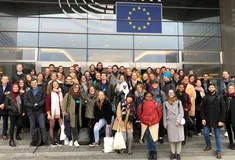
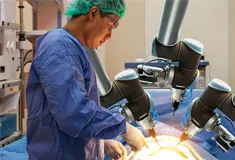
Photos from Erasmus School of Social and Behavioural Sciences (ESSB), Erasmus University Rotterdam

Videos from Erasmus School of Social and Behavioural Sciences (ESSB), Erasmus University Rotterdam

Related Information

See other universities in Rotterdam

Find out more about studying in the Netherlands